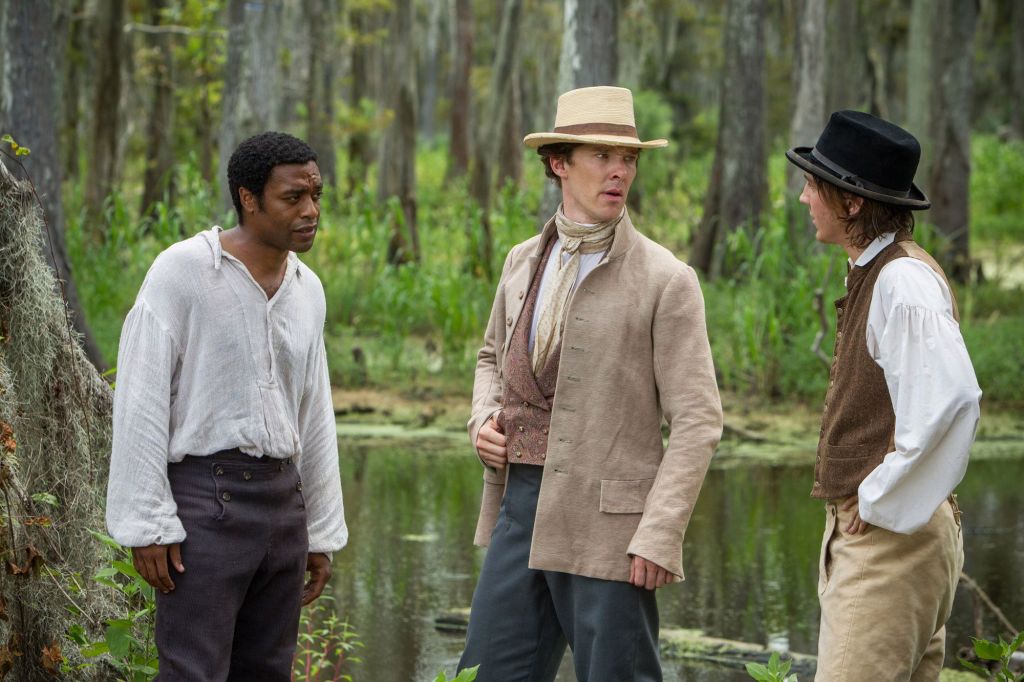
12 Years A Slave (2013), directed by Steve McQueen, starring Chiwetel Ejiofor (Solomon), Michael Fassbender (Epps), Lupita Nyong’o (Patsey) and a whole host of other big names, tells the story of a musician and free man kidnapped into slavery.
The first time I watched this film many years ago, I was very moved by the storyline, and thought it was a fantastic, beautiful portrayal of a horrific time. The characters were 3D and had their own arcs, only improved by the amazing talent of the cast. I was particularly interested in the different classes and statuses of the black characters which is something that I haven’t seen explored in other films about slavery.
I wish I could say more about this masterpiece, but the honest truth of it is that it’s all been said before. It’s been out for coming up to 7 years now, and has been praised to the heavens and back in the time.
I would most definitely recommend this film to anyone who hasn’t seen it. It’s a beautiful piece and an important story.
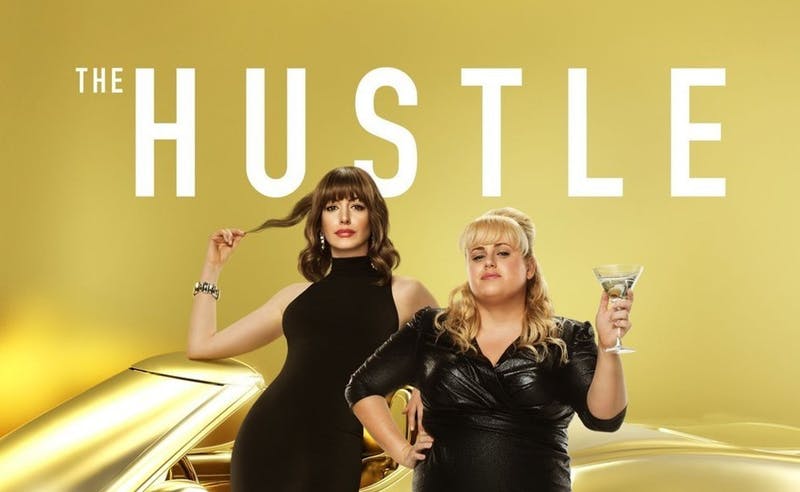
The Hustle (2019), directed by Chris Addison, starring Rebel Wilson (Penny) and Anne Hathaway (Josephine) tells the comedic story of an amateur con-artist pairing up with a professional.
Comedy is one of my least favourite genres, but somehow it’s more bearable when Rebel Wilson is involved. I know, I know, many people aren’t too fond of her; but I do find her endearing and like her personality even if some of her jokes don’t land. She has a particular style, unfortunately rooted in slapstick humour, but I can appreciate it.
Not being familiar with comedy, and not being its target audience, there’s not much I can say analytically in terms of the composition of the film. I think it follows a pretty standard arc, with the ‘funny’ plot twist near the end. Nothing too deep, nothing too genius, but also nothing too bad.
I’d probably recommend this film if my friends and I were scrolling past it on Netflix, mindlessly searching for something to watch; but not proactively.
(This film was watched on 05/01/20 – I’m getting really behind with my write-ups!)
Time Freak (2018), directed by Andrew Bowler, starring Asa Butterfield (Stillman), Sophie Turner (Debbie), and Skyler Gisondo (Evan), is an interesting sci-fi film exploring the possibilities of erasing past regrets.
I’m a huge fan of Asa Butterfield and I think we have a similar taste in films as the works he’s usually in, I enjoy. As such, I simply had to watch Time Freak. And I’m glad I did. It was a very enjoyable experience, and a very easy watch. Light comedy and a light storyline.
My favourite aspect of this film was the relationship between Stillman and his best friend, Evan. In fact, I think for most of the film, Evan stole the show. I found his character arc far more compelling than any of the other characters, including the protagonist. And I think having a strong secondary character is good for a buddy film (which this should’ve been), or a comedy – and Evan certainly provided the comedic elements of the story.
I don’t really have many criticisms of this film as it was just a light-hearted film and therefore I couldn’t really take anything too seriously. Time travel and the butterfly effect are tricky ideas to delve into and obviously there are always going to be issues with that, but keeping the film light and establishing the parameters well means that the filmmakers didn’t really have to solve all the issues revolving around their premise.
Overall, it was a very cute film to watch and I’d possibly watch it again with friends, and I’d recommend it for some easy watching, but by no standards would I say it’s a masterpiece.
Little Women (2019), directed by Greta Gerwig, stars an impress cast of Soairse Ronan (Jo), Emma Watson (Meg), Florence Pugh (Amy), Eliza Scanlen (Beth), and Timothée Chalamet (Laurie). It’s a beautiful film adaptation of one of my childhood books.
With my knowledge of the original story, I think this film does it a great justice in capturing the essence of the loving chaos between the sisters, their own individuality, and Jo’s struggle to balance her own desires for independence with a love for the people around her. I particularly like the style of dialogue implemented, leaving a strange silence in the absence of the girls.
In truth, I really loved this film. However… I was not a fan of the ending at all. All through the film, there’s this consistent idea that although Jo has a lot of love for everyone around her, she’s not romantically inclined – even with the establishing of her perfect match in Laurie. She’s portrayed as aromantic. As such, it was incredibly frustrating to see her have a last-minute romantic surge which wasn’t built up at all.
It’s important to come to a satisfying resolution at the end of a story – be it good or bad, or something in between. Following the great amount of establishing of the bond between Jo and Laurie, and lack of anything between Amy and Laurie; it was incredibly dissatisfying to see Amy and Laurie end up married, instead of the QPR (queer-platonic relationship) between Jo and Laurie that their storylines seemed headed towards.
I appreciate that they tried to imply that the romantic resolution between Jo and Friedrich was just the romantic ending to the story that social attitudes at the time wanted, and pushed upon the writer – I did greatly enjoy the meta feel of those scenes. And if the film had simply ended after the scene with Jo talking to the publisher about including a romantic ending, I would’ve been satisfied. But it didn’t, and I think that was its biggest mistake. The happy-go-lucky end scene with the whole family in Jo’s school, for me and my friends at least, undid the purpose of the scene with the publisher – implying that the romantic resolution was actually real.
All in all, though, I did very much enjoy this film and have recommended it to other friends. Despite its flaws, it was a work of art and an incredible experience.
(This was my film for 03/01/2020, just written up late)
Shattered Glass (2003) tells the story of a young reporter working for a prestigious magazine whose pieces are revealed to be mostly fictitious. It’s based on the true story of Stephen Glass and his scandal with The New Republic. Directed by Billy Ray and starring Hayden Christensen.
I, being a massive fan of Hayden Christensen, love this film by default. Perhaps I’m too kind on it, but I do believe that it is a fascinating story told in an interesting way. That being said, I found it a disappointment in comparison to some of Christensen’s other works.
One of the best aspects of this film is how they managed to weave the facts and authentic details in with a compelling dramatic story. We get very much charmed by the unique personality of Stephen Glass, and over the duration of the film, these little quirks take a more sinister feeling – in my mind, in any case. And reading up about friend’s accounts about what happened has really shone a light on the adherence to truth in this movie, in that Stephen Glass is really that charmingly quirky person. Yet they didn’t have to sacrifice any story in doing so. I think that balance is hard to get when dealing with stories based upon real people, particularly those so closely resembling the person and painting a negative picture of them.
I also absolutely adore how Chuck is logically the hero in this story, as he is the one who exposes the wrongdoings of Stephen; yet at the end of the film, I’m still sympathetic to Stephen. There’s still a part of me taken in by the young weirdo and wishes for his fortune and feels for his pain. And judging by the accounts, the real person has this effect on many people.
However, and perhaps this says more about me than the movie itself, I found it quite dull. I’m not one to chase highly entertaining things – not a fan of big explosions and massive dramatic shows, but I do believe there was something lacking here. I think it boils down to polarity shifts and tension. The film, for Stephen, starts in a place of relative comfort before he’s confronted with an unfamiliar situation. It’s then that his journey starts going downhill and this happens very gradually. He’s slowly let down from his pedestal. Right up until the last scene when the audience is faced with the stark reality of everything, when Stephen stops lying. As the film is trying to conceal the truth and have it slowly unravel, there’s not much put in place for building tension and hope, which keeps things quite flat.
Overall, I have enjoyed this film enough to watch it quite a few times, and would hesitantly recommend to a friend dependent upon whether or not they like the slower stories.
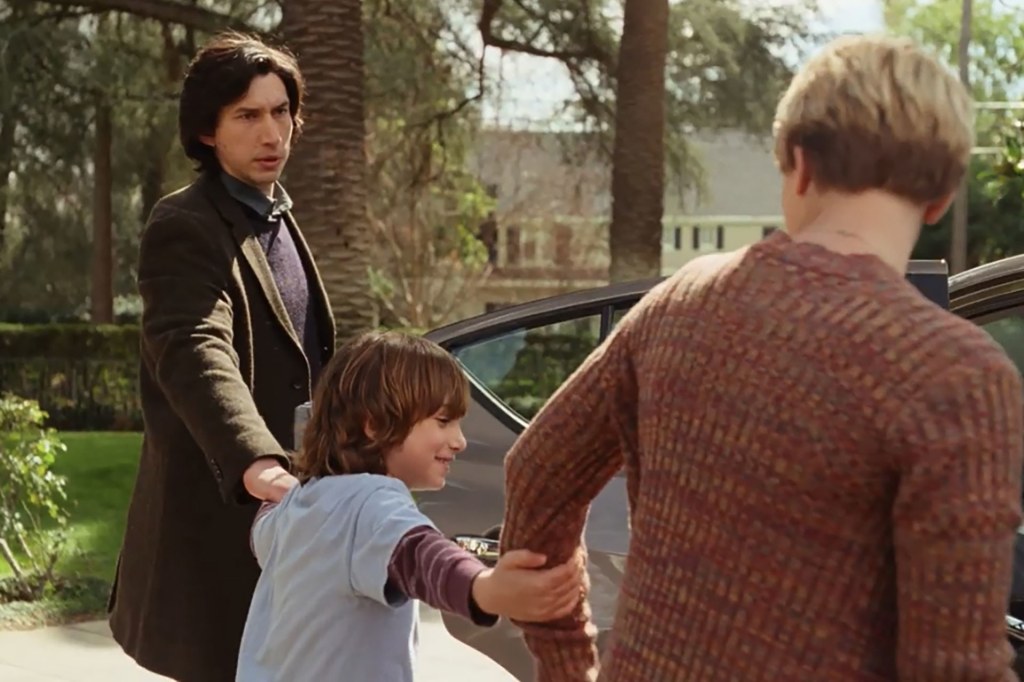
Marriage Story (2019) is a Netflix film directed by Noah Baumbach, starring Adam Driver and Scarlett Johansson. It tells the story of a couple going through a divorce but trying to maintain their family.
This film was recommended to me a while ago by a close friend who is also studying filmmaking, and I’m ashamed that it took me so long to watch it but knew it would be a fantastic film to start off my year-long challenge.
It’s beautiful, the acting is phenomenal, and the story is really quite something special. My personal favourite aspect was the way the scenes were edited together, which caught my eye at the beginning of the film – each scene seamlessly flowed together and kept me very much engaged. And the tonal shift when they’re revealed to be in couples counselling to prepare for their divorce hits just the right spot for me. Baumbach set up the story in such a brilliant way, and it would’ve been nice if he had maintained some elements of that throughout the film, too. Alas, it was mainly the beginning that was so stylised.
I’m a big fan of the structure of the story, too. It’s almost as if the two main characters ended exactly where they had started, but in a cathartic way. They were where they needed to be at the beginning but lost sight of that in the middle, before making it back to that at the end. There was a part of me that has gotten so used to stories like this ending in a huge romantic getting-back-together bit that was a little disappointed (maybe because I’m overly invested in Adam Driver’s character), but I ultimately think it was the best decision to end it like it did. The characters are able to stay a family, to keep their love for another, but separate. I think that’s an important message to share.
I’ve never had to deal with any of the themes brought up in the film – never even had a big, feisty breakup. But the realism portrayed in this film is one of its greatest assets. I was able to understand and empathise with each of the characters in a really great way. They weren’t portrayed as anything more than the humans they were. I think this aspect may be the reason why so many people are perking up to this film… There does seem to be a favouring of realistic, authentic portrayals.
What I personally didn’t enjoy about Marriage Story was how ‘theatre’ it felt at times to me. Great long monologues, a heavy reliance upon the acting to tell the visual story, and, of course, the incorporation of the scenes with dancing, acting, and singing. I zoned out most during the scene where Charlie (Adam Driver) performs his song – it took up too much time, and didn’t reveal enough about the plot or move the story enough for me. Though it was very pretty, and I know my friend would’ve thoroughly enjoyed these little moments.
Overall, I think it’s a very nice film, but I probably wouldn’t see it again, just because there’s not ‘enough’ in it to warrant a re-watch. Though I would recommend to others!

 365 Films